
Hello management
Parking management that pays off.
Payments, access and rates in one place. No barrier drama.
Hello:Parker runs the whole thing for you: automated, transparent, and fair to every driver.
Book a call
Your contact
Alessandro Seria·+49 9131 927825-1
The terms first.
What is parking management?
Parking management means the use of your space is governed and paid for: who drives in, how long they stay and what that costs.
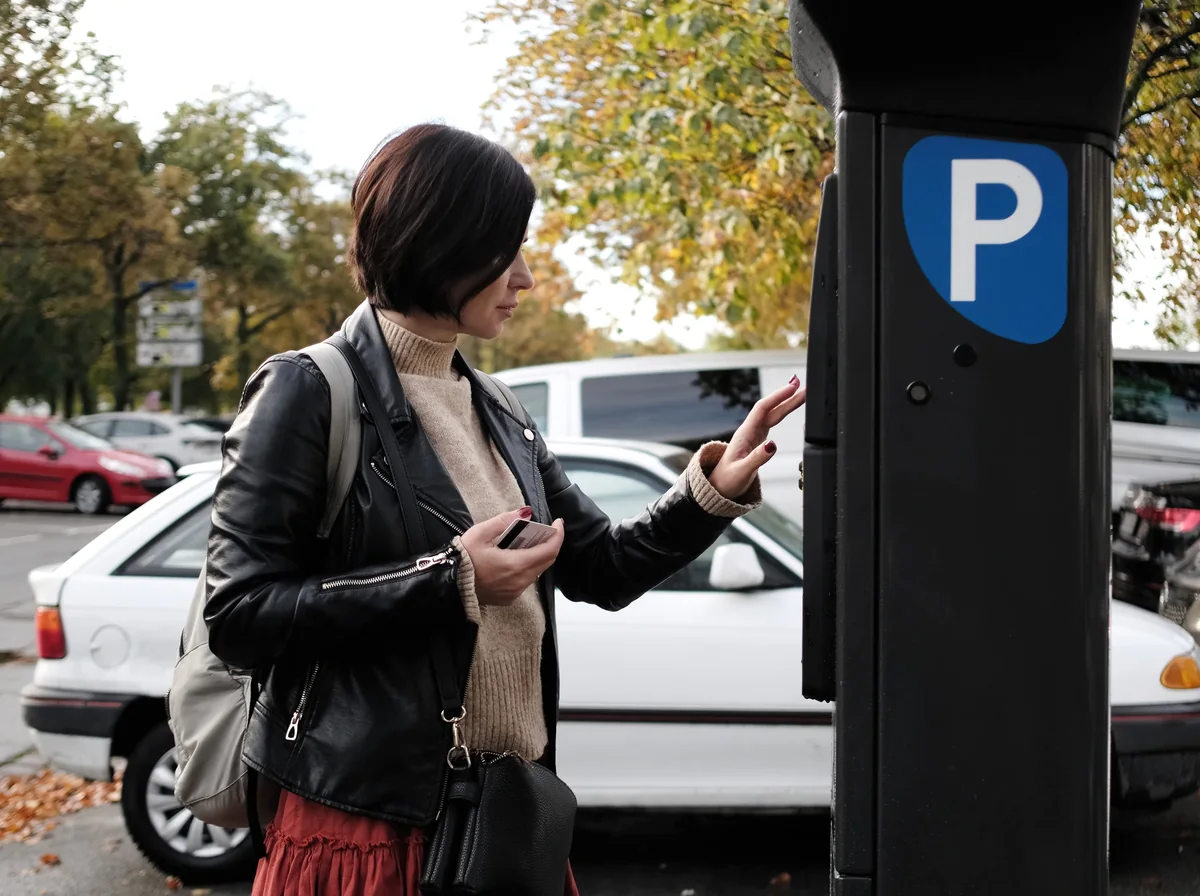
We prefer to work without a barrier. Then parking lot management runs in three steps: On the way in, the camera reads the plate and sets a timestamp. While the car is parked, the fee runs by the minute. Payment happens at the machine, in the app or online, for up to 48 hours after the exit. If you want a barrier or tickets, we set that up just as readily.
So the fee rises with the parking time, and your space earns from the first minute. You can see at any moment how much has come in.
It differs from monitoring in its purpose: here your drivers pay for their time, there the rules apply even without a fee. Both work on private and on municipal spaces.
Free site analysis
Analyse free of charge*, then decide
How your space is actually used cannot be guessed. We run an analysis on site: who stands when, where it gets tight and what the space can carry.
The analysis is free for you. You then decide on figures rather than a hunch.
* The site analysis is free of charge if you then appoint us to run your site.
That's what makes the difference.
Easy to run. Drivers who leave happy.
Customer lot, staff bays or a bit of both, the rules, payment and access simply run in the background. You keep the full picture without ever setting foot on site.

Costs down, revenue up.
A plate-based setup trims your costs, and idle space starts earning.
Pay however you like.
Classic pay station or fully digital, whatever your drivers reach for first.
No extra effort.
If someone overstays, we get in touch. You never have to chase anyone.
GDPR-compliant.
No rolling video surveillance and no grey areas. What gets captured is the plate at the entrances, nothing more.
Smooth operations.
Hardware and software built for each other, meshing without friction.
Room to move on fees.
Subsidise parking fees where it helps, or drop them altogether.
Who owns the site.
Municipal and private parking management: the difference
The difference is not the barrier. It is who owns the site and whether it is dedicated to general traffic. A public car park is part of public traffic space – there the municipality sets the tariff schedule and the authorities are in charge.
On private ground you decide: tariffs, maximum parking time, who parks free of charge. The basis is your right as owner, not a municipal by-law.
Your ground, your rules.
The legal basis
On private ground your property rights apply. You set the tariffs, the maximum stay and who parks without a fee.
For the terms to hold, they stand visibly at the entrance before anyone drives in. Whoever drives in enters a usage contract.
If someone does not pay, the penalty from that contract applies.
What changes in daily operation.
Digital parking management: barrier or plate
Both routes collect reliably. The difference only shows in daily operation: in servicing, at peak times, and when something fails.
| Barrier and ticket | Plate-based | |
|---|---|---|
| Servicing | ✕Mechanics and machine wear out. | ✓Barely any moving parts. |
| Peak times | ✕Everyone stops, queues build. | ✓Drive through without stopping. |
| Staff | ✕Faults and questions on site. | ✓Operation and questions through us. |
| Data | –Whatever the machine counted. | ✓Every entry and exit with a timestamp. |
| Hard access limit | ✓Physically shut. | –Open, steered by permits. |
By the way: a barrier already standing on your site does not have to go – and the software you already work with is connected just the same.
The counter-calculation.
What does parking management cost, and what does it bring?
On the cost side sit the hardware at the entrances, the signage and the running operation. With us that runs as a full service, so you buy no hardware.
On the revenue side sit the parking fees themselves, plus the hours your space currently stands unused: evenings, weekends, after-work parking.
And something falls away. Anyone running a barrier today pays for mechanics, ticket refills and a fault service. Anyone checking manually pays working time.
What is left at the end depends on the size of the space, the entrances and the tariff. We work it through with you before you decide, with your figures rather than averages.
Where the operation pays off.
Which spaces parking management pays off for
Common questions
Questions about parking management.
Contact