
Hello licence plates
The plate is the ticket.
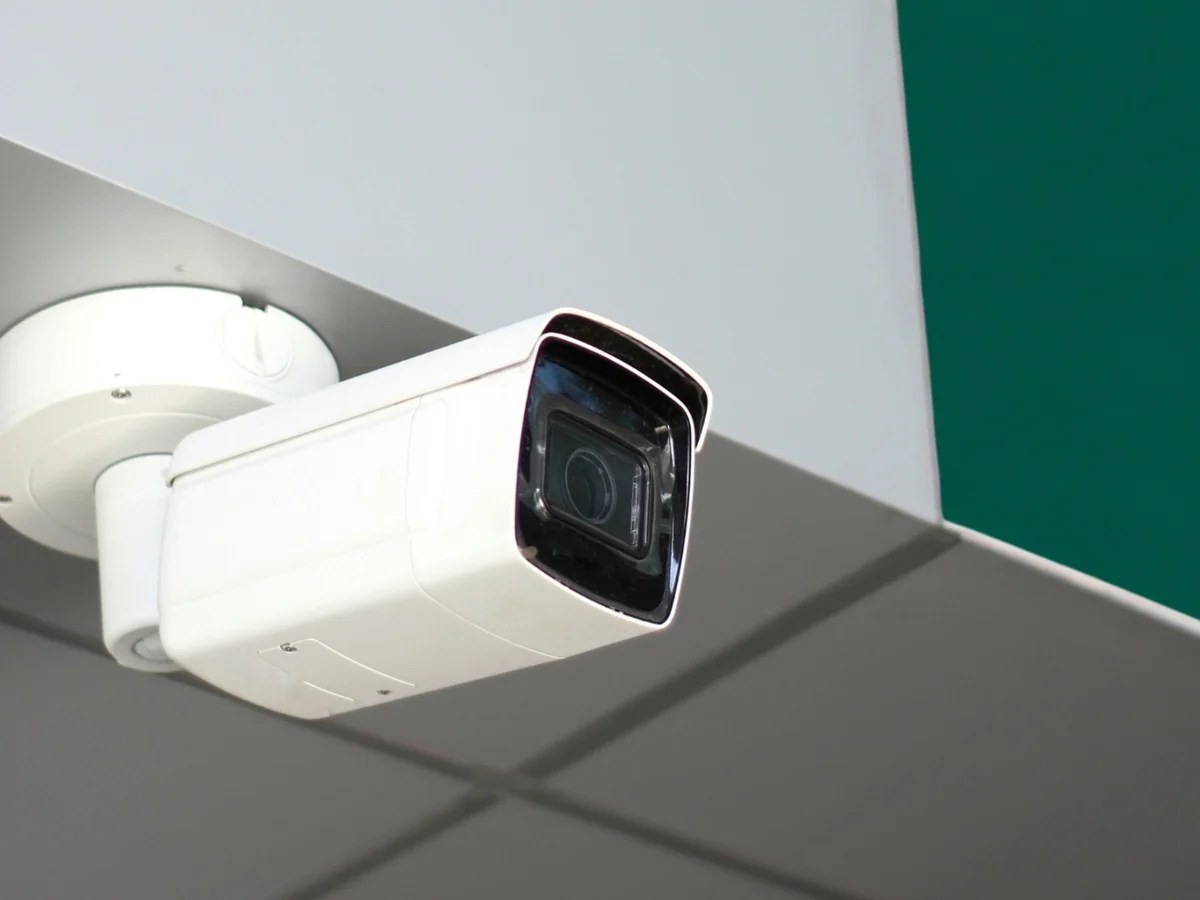
Cameras at the entrance and exit read the plate as the car drives past. No stopping, no ticket, no barrier. The system works out the parking time by itself.
Book a call
Your contact
Alessandro Seria·+49 9131 927825-1
What is licence plate recognition?
Licence plate recognition captures a vehicle's registration plate automatically by camera and turns it into text. In a car park the plate becomes the ID: entry gets a timestamp, so does the exit, and the difference is the parking time.
The method is known as ANPR (Automatic Number Plate Recognition) or LPR (License Plate Recognition). Both terms describe the same technology. ANPR is the common abbreviation in Europe, LPR in the United States.
For your space that means access, parking time and permits can be checked without a barrier and without a ticket machine. Anyone with a standing permit simply drives through.
Free site analysis
Analyse free of charge*, then decide
How your space is actually used cannot be guessed. We run an analysis on site: who stands when, where it gets tight and what the space can carry.
The analysis is free for you. You then decide on figures rather than a hunch.
* The site analysis is free of charge if you then appoint us to run your site.
Four steps, none of them your work.
How one visit runs.
The camera reads the plate as the vehicle drives in. A timestamp is set. Nobody has to stop for it.
Licence plate recognition in car parks and on open lots
On an open lot, licence plate recognition and free-flow parking can make day-to-day operation considerably simpler: cameras at the entrance and exit read the plate, the way in can stay open, and the ticket falls away. How far that carries depends on the entrances and on who uses the site.
A multi-storey car park usually adds several levels and an existing barrier. Recognition can handle the capture there too – whether the barrier stays or goes is something we decide for each site individually. Existing equipment can often keep running.
Does licence plate recognition comply with data protection law?
Yes, as long as processing stays limited to what is needed. Our system reads only the plates of vehicles driving in and out. No faces, no occupants, no running video surveillance.
What is recorded is the plate and a timestamp. The data is processed in Germany and stored and deleted under GDPR rules. The terms of use for your space are displayed visibly before the entrance.
Three ways to bring order to a space.
Camera, ground sensor or barrier.
Each of the three has its place. What suits your space depends on the entrances, the user groups, and how much hardware you want buried in the surface.
| Method | Work on site | Running costs | Experience for drivers | Limits |
|---|---|---|---|---|
| Plate recognition | ✓Only the cameras at the entrances get mounted. The effort stays small. | ✓Low. There is barely a part that wears out. | ✓Drive through without stopping | Covered or dirty plates need a fallback route |
| Ground sensors | –One per bay, set into the surface | ✕Battery changes and servicing per sensor | ✓Drivers never notice them | Occupancy yes, identity no: permits cannot be checked this way |
| Barrier | ✕Built entrance, mechanics, ticket machine | ✕Servicing the mechanics, faults during operation | ✕Stop, take a ticket, wait | Queues at peak times, a fault blocks the entrance |
By the way: existing cameras can keep running if their position and image quality hold up – and your management software is connected along with them.
Where the technology reaches its limit.
A camera records who drives in – it cannot stop anyone. Where an entrance has to be physically closed, for instance because a level stays reserved for certain users, number-plate recognition alone is not enough. Only mechanics can hard-limit access.
Then we install a barrier, and often the combination is the right answer: number-plate recognition for capture and billing, a barrier exactly where access has to be sealed. Planning, installation and operation are ours in both cases.
Common questions
Questions about plate recognition.
Contact